Patient Booking Journey: 5 Touchpoints Clinics Must Optimize
In healthcare, being visible online is just the beginning. Patients now have more options than ever, and their booking decisions are shaped by multiple touchpoints before they even call. Understanding where and how patients evaluate clinics helps healthcare providers optimize their marketing and convert online visibility into confirmed appointments.
Let’s break down the key touchpoints that influence patient decisions and how clinics can optimize each for better bookings
1. Reviews & Ratings – The Foundation of Trust
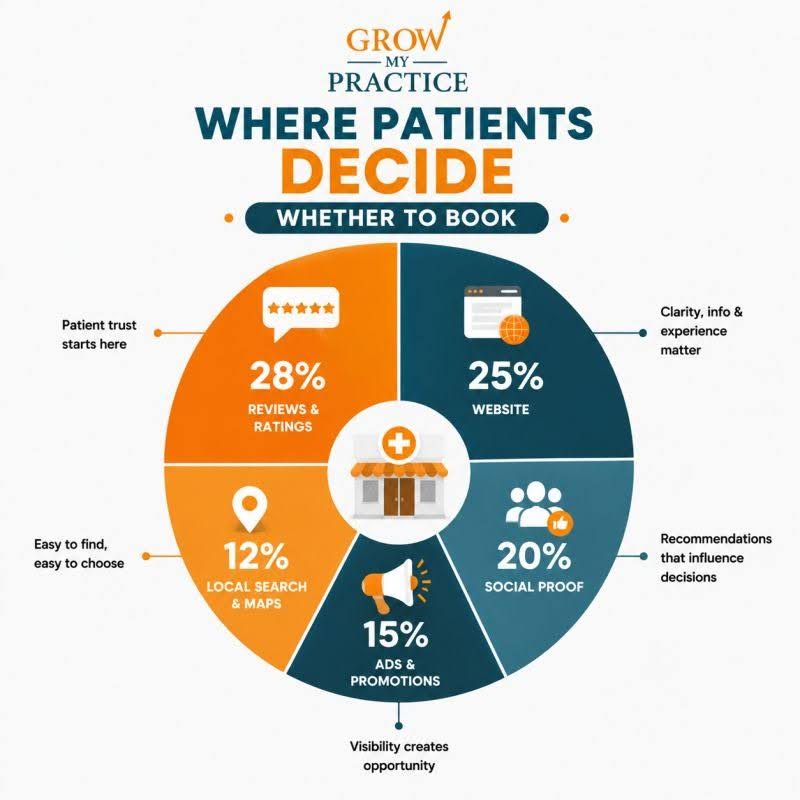
Trust is the single most important factor when patients choose a clinic. Research shows that 28% of patients rely on online reviews and ratings to make their decision. Why it matters: High-quality reviews act as social proof. They validate your expertise and reassure potential patients that your clinic delivers reliable care. Actionable tips:- Encourage patients to leave detailed, honest reviews.
- Respond thoughtfully to both positive and negative feedback.
- Display testimonials prominently on your website and social channels.
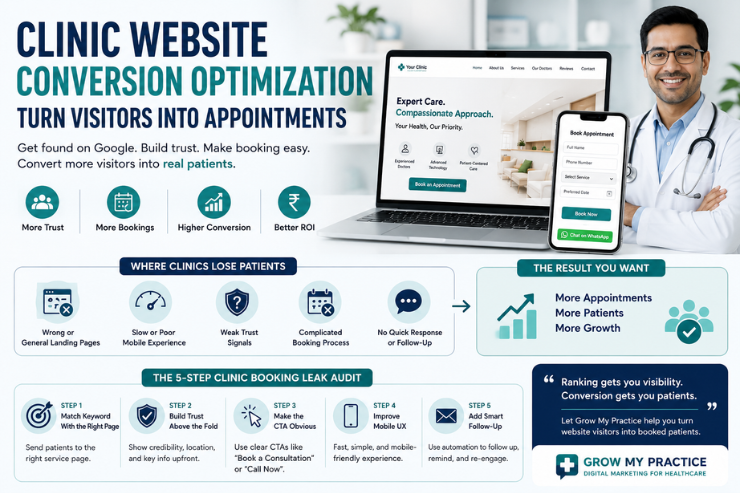
2. Website – Your Clinic’s Digital Trust Engine
A clinic website accounts for 25% of patient decision-making. It’s often the first place patients assess credibility, services, and expertise. Key elements:- Clear service descriptions for each treatment
- Practitioner bios and experience
- FAQs and patient guidance
- Before-and-after visuals or case studies
- Use structured data (schema markup) for local search and AI visibility.
- Include actionable CTAs like “Book Now” or “Schedule Consultation” on service pages.
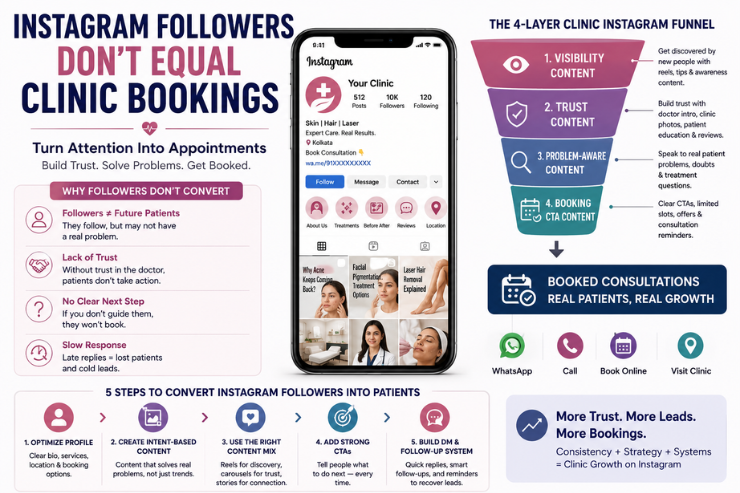
3. Social Proof – Influence Through Community
Social proof drives roughly 20% of patient decisions. This includes patient stories, engagement on social media, and endorsements from the community. Why it works: People are influenced by the experiences of others. Positive engagement reassures potential patients. Implementation tips:- Highlight real patient experiences, success stories, and results.
- Engage with comments and questions to show responsiveness.
- Use video content, polls, and interactive posts to increase relatability and trust.
4. Ads & Promotions – Strategic Visibility
Paid campaigns impact about 15% of patient decisions, but they work best when paired with trust-building strategies. Best practices:- Target relevant audiences based on location, demographics, and intent.
- Track which campaigns lead to actual bookings, not just clicks.
- Keep messaging clear—highlight solutions, services, and patient benefits.
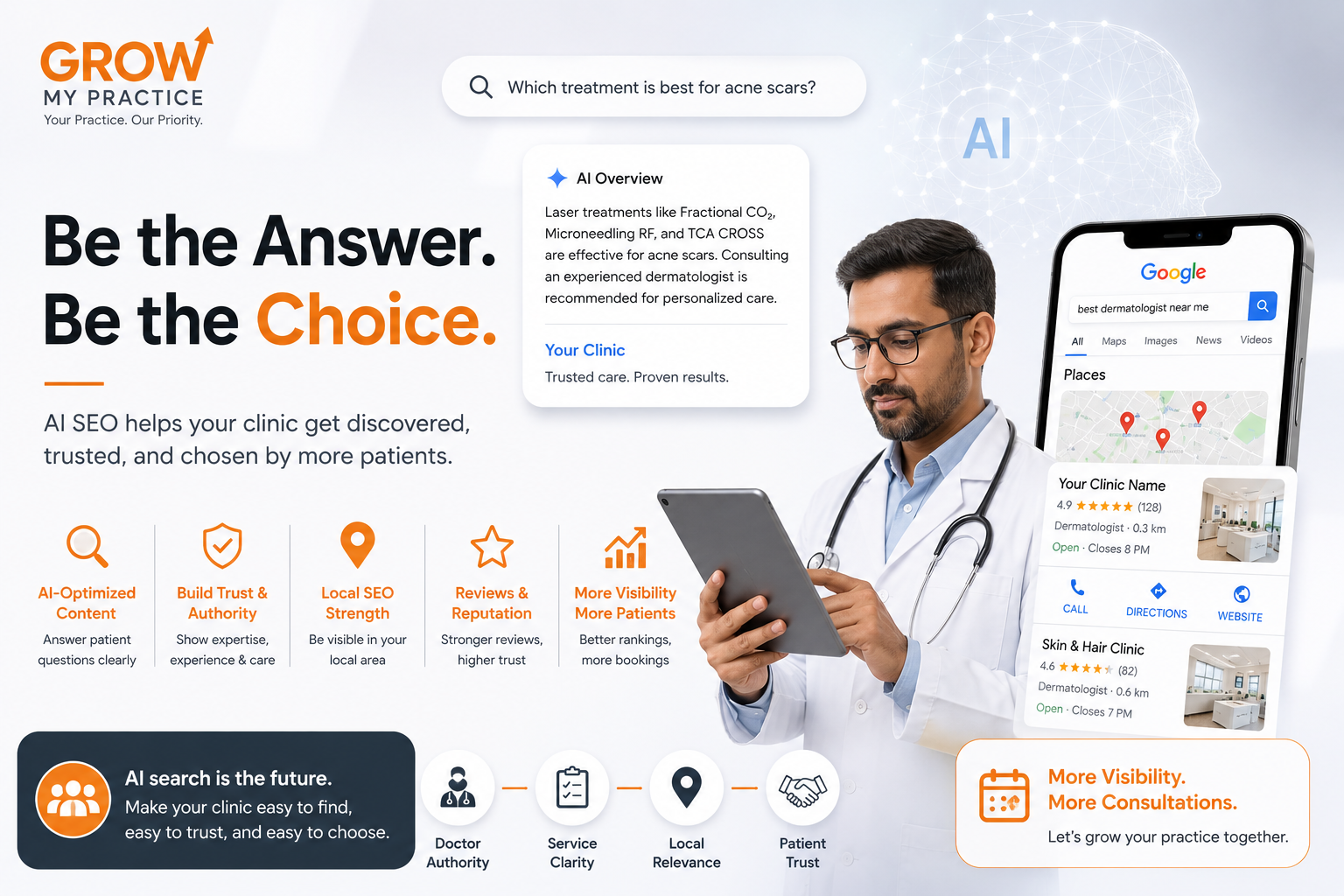
5. Local Search & Maps – Be Easy to Find
Around 12% of patients rely on Google Maps or local search when deciding which clinic to choose. Local SEO ensures your clinic is discoverable and convenient. Optimization tips:- Keep NAP (Name, Address, Phone) consistent across all listings.
- List your clinic in niche medical directories.
- Update your Google Business Profile regularly with photos, posts, and reviews.
Connecting the Dots: Multi-Touch Marketing
No single touchpoint drives patient decisions. Clinics that integrate all five factors create a seamless journey:- Build trust with reviews & ratings
- Provide a conversion-optimized website
- Reinforce credibility with social proof
- Use performance marketing to nurture engagement
- Optimize local search for discoverability
FAQs
- Which factor influences the most patient bookings? Reviews and ratings, influencing 28% of patient decisions, remain the strongest trust signal early in the journey.
- How important is a website for clinics? Extremely. About 25% of patients evaluate service clarity, practitioner details, and treatment options before booking.
- Does social proof really affect conversions? Yes. Engagement, testimonials, and community validation influence 20% of patients’ decisions.
- Can ads alone guarantee appointments? No. Ads raise awareness but must be paired with trust-building and clear service information for actual bookings.
- Why optimize for local search and Maps? Local search ensures discoverability and authority, impacting 12% of patient decisions and strengthening clinic credibility.